





Modern life moves quickly. Routines tighten around us, days blur, and we’re often left feeling disconnected from the world outside our screens. In moments like these, many of us feel an instinctive pull toward something wider, quieter, and more human. It’s in that space that we begin to understand why travel is important. Not just for leisure, but for our well-being, clarity, and sense of meaning.
Researchers point out that humans have spent most of our history as nomadic beings, moving through landscapes not out of luxury, but necessity and curiosity. That ancient instinct hasn’t disappeared. Travel still reshapes how we think, feel, recover, and grow. And often, it is in wild, open places – mountains, deserts, rivers, forests – where we return to ourselves most clearly.
Below, we explore a number of reasons to travel, paired with quiet, restorative moments from Adventures Unbound destinations across the United States.
‘Awe’ Restores Perspective and Softens Stress
One of the most powerful explanations for why travel is important lies in the science of awe. Researchers at UC Berkeley found that awe expands our sense of time, reduces stress, and promotes generosity and well-being.
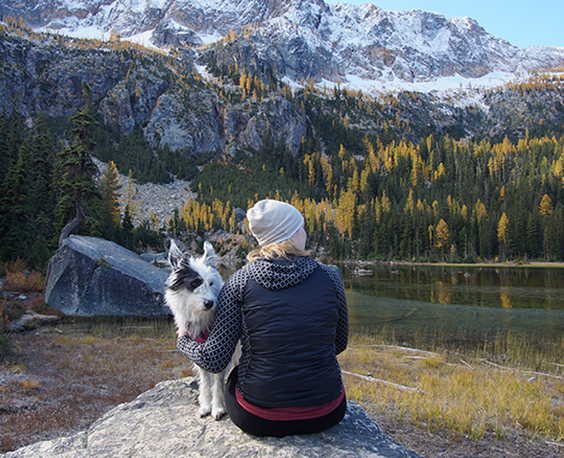
Places like Mount Rainier embody this phenomenon. Near Paradise Inn, trails wind through sweeping meadows where summer wildflowers bloom beneath the mountain’s towering, snow-capped peak. In winter, the same slopes are blanketed with snow, and the stillness feels profound. Whether surrounded by color or a calm wintry white, the landscape seems to hush the mind – letting thoughts loosen, realign, and settle.
In nature, perspective returns. Worries shrink. Meaning sharpens. And the world feels open again.
New Environments Expand Your Mind and Creativity
Research by Columbia Business School shows that experiencing new cultures improves cognitive flexibility and creative problem-solving.
Big Sur offers one of the richest expressions of California’s natural beauty. From Big Sur Lodge, trails lead directly into towering redwood groves, sun-dappled forests, and the rugged landscapes of Pfeiffer Big Sur State Park. The surrounding area blends river valleys, wooded paths, and dramatic coastal terrain – a mix of environments that encourages visitors to slow down and take in the scenery. It’s a world away from the fast-paced, busy lifestyle that you’ll find in many of the state’s big cities. With forest, shoreline, and canyonlands all within reach, it’s also the kind of place where the mind naturally feels more open and at ease.
This example gives us a strong answer to the question of why people should travel: because stepping into a new environment expands the way we think, imagine, and interpret the world.
Travel Encourages Natural Movement and Physical Health
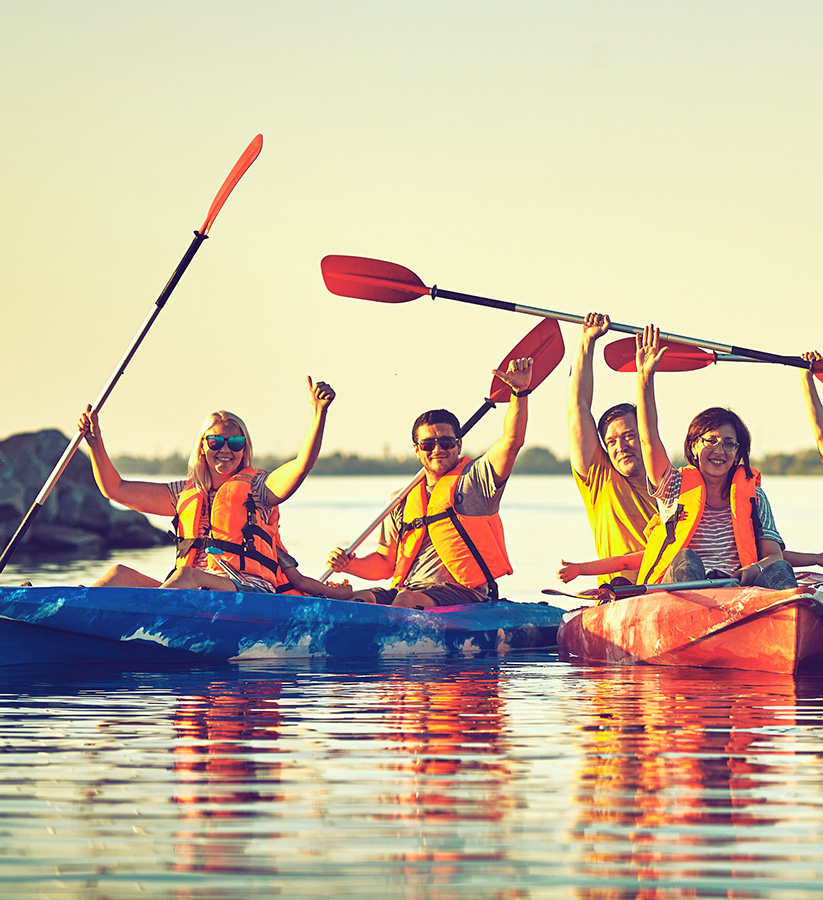
Traveling naturally encourages movement. According to a 2023 review, choosing active ways to explore – like walking, hiking, or paddling – supports better overall health and contributes to a more active lifestyle.
At Willow Beach Marina, movement feels natural. Set along the Colorado River’s Black Canyon, the area offers miles of shoreline to explore by kayak or canoe, with watercraft rentals available right at the marina. As you paddle along these quiet stretches of river, the desert cliffs rise around you and the landscape encourages a steady, unhurried pace. It’s the kind of activity that lets your body work without feeling pushed.
When physical activity comes from curiosity rather than obligation, the benefits last far longer.

Travel Helps Reduce Stress and Improve Mental Well-Being
A study by the American Psychological Association found that vacations reduce stress, boost mood, and improve well-being – with effects that last for weeks after returning home. Water environments offer additional benefits. Marine biologist Dr. Wallace J. Nichols’s work on “blue mind theory” shows that being near water calms the brain and lowers stress hormones.
Blue Spring State Park embodies this feeling perfectly. The spring’s crystal-clear water moves gently through a subtropical forest, creating a calm, glassy ribbon of blue where manatees gather in the cooler months and paddlers drift quietly along the shoreline. Wildlife moves softly through the trees, and the stillness of the water creates the kind of quiet that settles into your body almost instantly. It’s the kind of place where you can practically feel your nervous system finally exhale.
These are clear reasons to travel: stepping into a landscape that slows your pulse, softens your thoughts, and reminds your body what calm truly feels like.
Even Nearby Escapes Can Transform Your Mood
Research shows that even a short break can restore your sense of well-being, easing stress and giving your mind room to breathe.
This is a hopeful reminder that ‘meaningful travel’ doesn’t always mean ‘long distance’. At Key Bridge Boathouse, a short paddle on the Potomac offers a surprisingly peaceful escape just minutes from the city. As you glide under the soft glow of early morning light, the river’s gentle current and the city skyline receding behind you bring a rare calm – a chance to quiet the mind and reconnect with the water and sky.
Travel is less about distance and more about openness to experience.
Changing Scenery Helps You See Your Life More Clearly
Some psychologists and environmental psychology studies suggest that even small changes of scenery can help people break patterns and see life from a new angle.
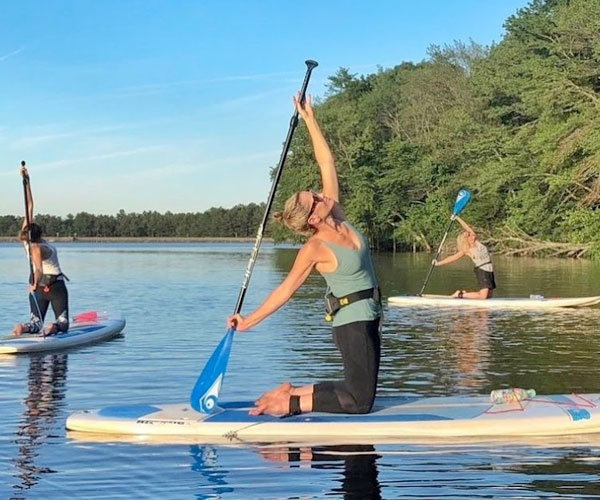
Cochituate State Park delivers that gentle reset many of us crave. With calm, wide waters, wooded paths, peaceful coves, and forest-fringed lake shores, the park invites soft footsteps and quiet paddles. Whether you glide across the lake or stroll among pine and oak, the pace slows. And with it, the cluttered noise of daily life begins to fade. In a place like this, clarity often finds its way back.
Sometimes all we need is a shift in scenery to see ourselves more honestly.

Shared Travel Experiences Strengthen Relationships
Psychological research suggests that couples or groups who share new and exciting experiences together, rather than repeating the same routines, tend to report higher satisfaction, greater emotional closeness, and stronger relationship bonds.
Bear Mountain State Park, with its forested trails, Hessian Lake, and sweeping Hudson Valley views, offers an ideal backdrop for family outings, friend getaways, or seasonal escapes. Whether hiking a woodland trail, boating on the lake, or enjoying the historic comfort of the Inn at sunset, these shared experiences weave themselves into lasting memories, stories that linger far longer than the visit itself.
These are the moments that soften us toward one another.
Travel Builds Confidence and Encourages Personal Growth
Stepping into the unfamiliar builds resilience and self-trust. Research in the Journal of Personality and Social Psychology shows that people who travel and study abroad become more independent, more emotionally stable, and display greater self-awareness.
Destinations at high altitudes, like The Lodge at Breckenridge can embody this feeling of expansion particularly well. Perched at more than 10,000 feet above sea level, the lodge offers sweeping mountain views and access to pristine hiking trails – a setting where the air feels clearer, the landscape opens wide, and many visitors find their own confidence rising to meet the terrain.
Each new step in unfamiliar terrain reinforces the same message: You are capable.
Travel Memories Matter Long After the Journey Ends
Neuroscience shows that when we experience something new or emotionally rich, those moments are encoded more strongly, creating lasting memories we can return to in challenging times. These memories become inner landscapes: a desert sunrise, the hush of a forest trail after rain, the mirror-like surface of a quiet spring. They stay with us, sustaining our resilience and sense of joy.
This is one of the most meaningful explanations of why travel is important: travel gives us memorable moments that keep nourishing us long after we return home.
A Gentle Reflection on Why Travel Is Important
Travel does not need to be grand or distant to be transformative. It simply needs to be intentional – a willingness to step outside your routine and into a place that reminds you of the world’s beauty.
Whether it’s the alpine quiet of Mount Rainier, the desert stillness of Willow Beach, the calming waters of Blue Spring, or a nearby lake or trail close to home, there is always somewhere that can help you breathe deeper, think clearer, and feel more alive.
These are the reasons to travel. These are the moments that stay with us. And if those moments weren’t enough, a further reason why you should travel is to return to your daily life emotionally and mentally nourished with new knowledge, new understanding, and new memories to recall, not simply to escape from your everyday.